
A practical, no-fluff companion for professionals who’ve stepped into leadership and suddenly realised the role is more complex than it looked on paper. Karen James breaks down the emotional weight, quiet pressures, and unseen dynamics that make management feel overwhelming. From navigating power and handling mistakes to ethical clarity and self-leadership, this book helps you build the mindset and muscle to lead well, without losing yourself in the process. If you’re managing people, projects, and expectations simultaneously, this is your blueprint for leading with clarity amidst complexity.
Personal Development, Professional Development
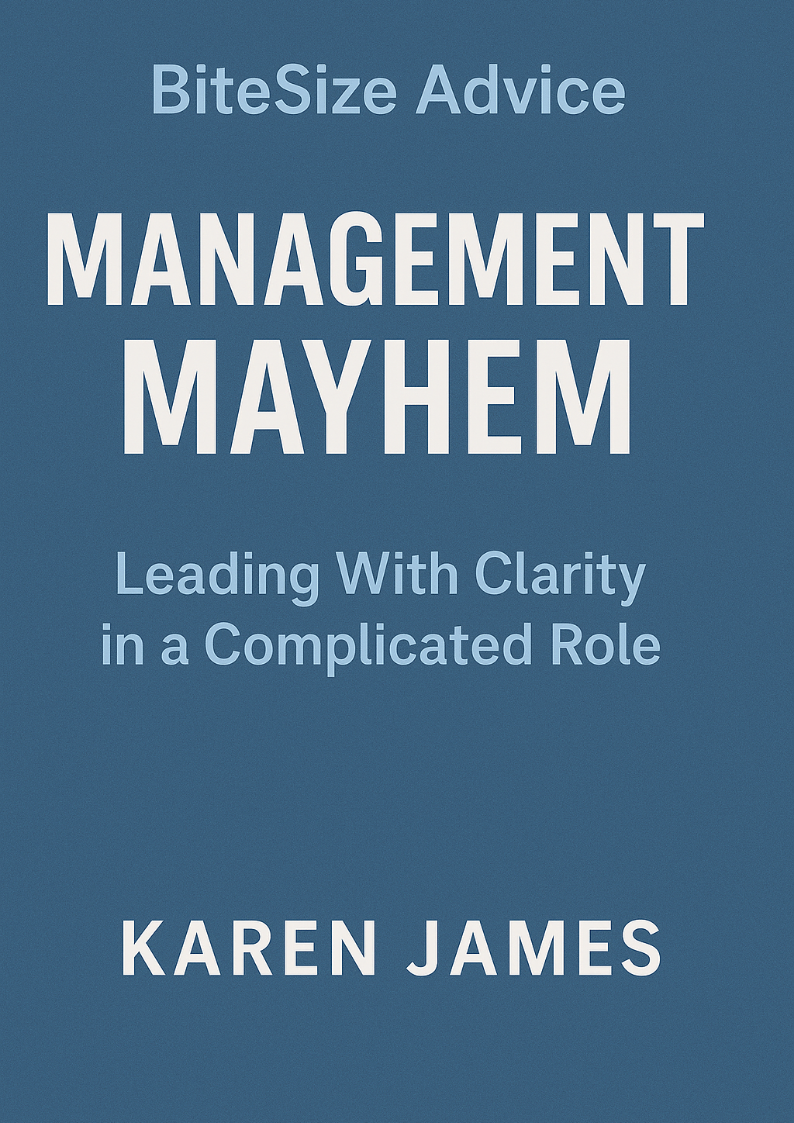
BiteSize Advice: Management Mayhem
$16.00
Small book, big impact, practical wisdom you can use today.
1 review for BiteSize Advice: Management Mayhem
Only logged in customers who have purchased this product may leave a review.



Karen James –
Official Review present by Ms. Pollett Lavia, SVG. at the Launch of the eBook series
If you’ve ever been promoted and thought, “Now What?” – this book is for you.
This isn’t a traditional leadership manual filled with theories, corporate jargon or cookie-cutter advice. It is a clear, practical, honest and much-needed guide for
professionals who find themselves promoted into leadership roles without the tools, mindset, or support to succeed. Drawing from the reality of the Peter Principle, where
people are promoted based on past performance rather than future readiness, it walks readers through the real challenges of early leadership, not with judgment, but
with clarity, compassion, and practical insight.
What makes this book stand out is its empathetic yet practical approach. It feels like a wise mentor pulling you aside and saying, “Here’s what no one told you – but you
need to hear”. Each chapter tackles a core challenge new managers face.
Chapter 1: When Promotion Doesn’t Mean Prepared
Promotion often feels like a reward – but without leadership training, it can feel more like a set-up to fail. The chapter explores how new leaders are expected to
“figure it out” while juggling new pressures, expectations, and responsibilities. The Peter Principle is reframed not as a personal failing, but as a systemic gap in how
organisations handle promotions.
Key takeaway – you’re not alone, and it’s not your fault – but it is your responsibility to grow.
Chapter 2: The Power Paradox
This chapter tackles the hidden weight of power. New leaders often misuse or misunderstand their power/influence. You’re no longer “just a colleague” – your
words carry more impact, and people may stop being honest with you if they don’t feel safe. The chapter challenges readers to use power to build trust, not protect ego,
and offers guiding questions such as: Am I inviting openness, or compliance? Am I leading with fairness or fear? It’s a powerful reminder that true leadership is quiet,
consistent, and fair.
Chapter 3: Mistakes Happen
You will mess up. One of the most liberating chapters, this section normalises the fact that leaders will make mistakes – and leadership doesn’t mean being flawless, it
means being accountable. It emphasises that how you handle mistakes (your own and others’) defines your credibility, avoiding ownership erodes trust; owning it builds it.
Best practices: acknowledge quickly. Be specific about what went wrong. Share what you’re doing differently. Invite others to do the same.
Key takeaway: Avoidance breaks trust. Honesty repairs it.
Chapter 4: Stop Hoarding the Work
Here is where the book gets intensely practical. New leaders often struggle to delegate, out of fear of losing control or having to clean up someone else’s mess. But by holding onto all the work, you become a bottleneck and rob your team of growth. Delegation here is reframed not as “giving up control” but as a coaching opportunity. It outlines a clear framework: Delegate institutionally (not just to whoever’s free). Provide context, not just tasks. Set expectations. Support, but don’t micromanage.
Key takeaway: great leaders don’t do more – they grow more people.
Chapter 5: Ethics in the Real World
A standout chapter, this dives into the subtle, everyday ethics that define workplace culture. Most ethical tests aren’t dramatic – they’re quiet, everyday choices: looking
the other way, staying silent, or going along with something that doesn’t feel right. Great leaders speak up, stay clear on their values, and lead with integrity, even when
its inconvenient. It gives practical tools for speaking up ethically, documenting issues, and navigating moral discomfort. And it reminds us: ethics isn’t a corporate policy –
it’s a daily practice.
Chapter 6: Leading Yourself First
This concluding chapter is a beautiful, reflective close. Leadership isn’t just about others – it’s also about managing your own emotional and mental sustainability.
Without reflection and rhythm, burnout creeps in, and decision-making deteriorates. It encourages boundaries, honest check-ins, and finding a support system (coaches,
mentors, peers).
Key takeaway: You can’t lead others well if you don’t care for yourself.
Instead of offering scripts or one-size-fits-all formulas, it offers mindsets, reflection prompts, and clarity – equipping you to lead not by fear or ego, but with integrity and
intention. Each chapter builds logically – from awareness of the role, to managing others, to managing yourself.
This is not a book about being the perfect leader, but on being present, ethical, and human in the role. It’s a book about becoming a real one – prepared for the pressure,
grounded in values, and committed to learning as you lead.
It is recommended for:
New or First-time leaders
High performers transitioning into leadership
Leaders feeling overwhelmed or misaligned
HR or L&D professionals supporting emerging leaders
Team leads or project heads looking to improve how they lead